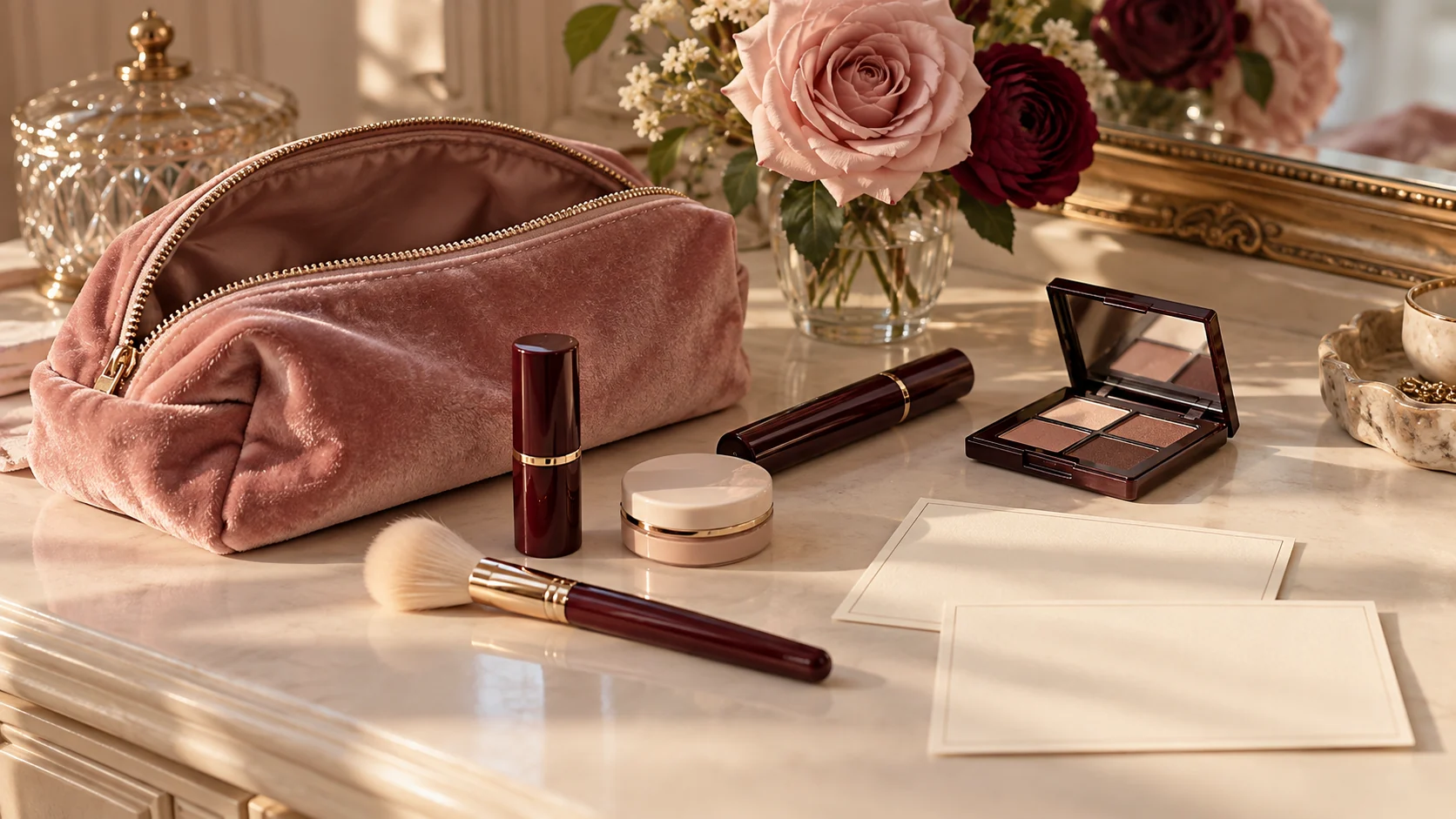
AI-created editorial illustration; not a product demonstration or verified result.
Build a small kit around two occasions you actually have. Map each useful step to a product already in your bag, try the combination, and shop only if a specific gap remains.
Choose a real morning and a real evening
A useful kit starts with your life, not a universal list of essentials. Name two situations you repeat: a workday and dinner with friends, for example. For each, write the finish you enjoy, the time you want to spend and one feature you want to emphasize. “Comfortable everyday makeup with a rose lip” is more useful than “perfect makeup.” You do not need a different bag for every occasion.
Give each product a job
Lay out the products you currently use. For each one, record its exact name, shade, intended use and the step it fills in your routine. A broad category such as “foundation” hides useful details: do you actually reach for it, like its finish and know how to apply it? Put regularly used products in your working kit. Put uncertain purchases on a separate decision list; owning something does not create an obligation to use it.
Keep the boundaries on the label
Follow the product’s directions, storage information and replacement guidance. Do not move a product into a different use just to make a smaller kit: FDA specifically warns against using cosmetics around the eyes unless they are intended for that area. Do not share eye cosmetics or add water to dried mascara. This is a planning guide, not an assessment of whether an individual product is safe for you.
A fictional example: Maya’s weekday and dinner kit
Maya chooses a familiar everyday look and a dinner variation. Her everyday kit uses the concealer, blush, mascara and rose lip color she already enjoys. For dinner, she keeps the same base and cheek choices and switches to a deeper lipstick she already owns. The change is one emphasis, not an entirely new routine. She tries it before the occasion and records what she actually used. These are fictional preferences, not a universal routine, product test or promised result.
The gap may not be a product
Suppose Maya’s deeper lipstick feels too strong for the look she wants. Before buying a new shade, she can revisit the application directions and practice a lighter application with the same product. If she still dislikes it, skipping that step is a valid option. Distinguish a missing product from an unfamiliar technique, an inconvenient container or a look you do not really want. Only the first problem necessarily calls for a purchase.
Make your shade notes specific
Record the brand, full product name, shade name and finish from the actual item. Add your own observation in similar lighting: too sheer for this look, easy to reapply, or a finish I prefer for evenings. A photograph, filter or AI-created image cannot establish a reliable shade match. Another person’s shade name is a clue to investigate, not proof it will look the same on you.
Try the smallest useful version
Practice one look using the proposed kit. Record what you used, what you skipped and which step needed more attention. Try the second look by changing one detail. Compare your notes rather than judging whether you resemble an inspiration portrait. If a step adds time but nothing you enjoy, remove it. A smaller kit is useful only if it serves you; there is no correct product count.
If you shop, write a one-sentence brief
Use this format: “I am looking for [product role] for [specific occasion], because my current option [observed limitation]. I need [shade/finish/use information], and my spending limit is [amount I choose].” Check the exact product, size, shade, seller and return terms before ordering. A retailer search result may contain several versions; a familiar thumbnail is not enough to identify the right one.
Know what is—and is not—available here
Makeup Is Life links to established-brand retailer recommendations and offers free editorial resources. In Bloom, Rose Hour and Gloss Hour are our collection concepts in development, not products available to order. This guide does not require buying anything. The free Beauty Planner can help compare an optional purchase after you identify a genuine gap.
Keep a combination worth repeating
Save one short note for your next morning: the occasion, products and shades, one technique, and one thing to skip. Repeat the combination before expanding it. The goal is less decision-making and more enjoyment—not a more impressive shopping list. A successful makeup-bag edit can finish with no purchase at all.
YOUR BAG, WITH A PLAN
Make your two-look map
Choose the roles you use; leave the rest blank. Entries stay in this page for this visit and are not sent or saved. Copy your notes before leaving.
Put your map to work
- Adapt the Everyday Rose look with your own products.
- Try a desk-to-dinner variation instead of a second full routine.
- Use the free Beauty Planner only for a real buying decision.
- Explore the seven-day remix when you want more practice.
For future looks and collection news, the existing Blush & Tell signup is optional. No purchase or subscription is needed to use this worksheet.